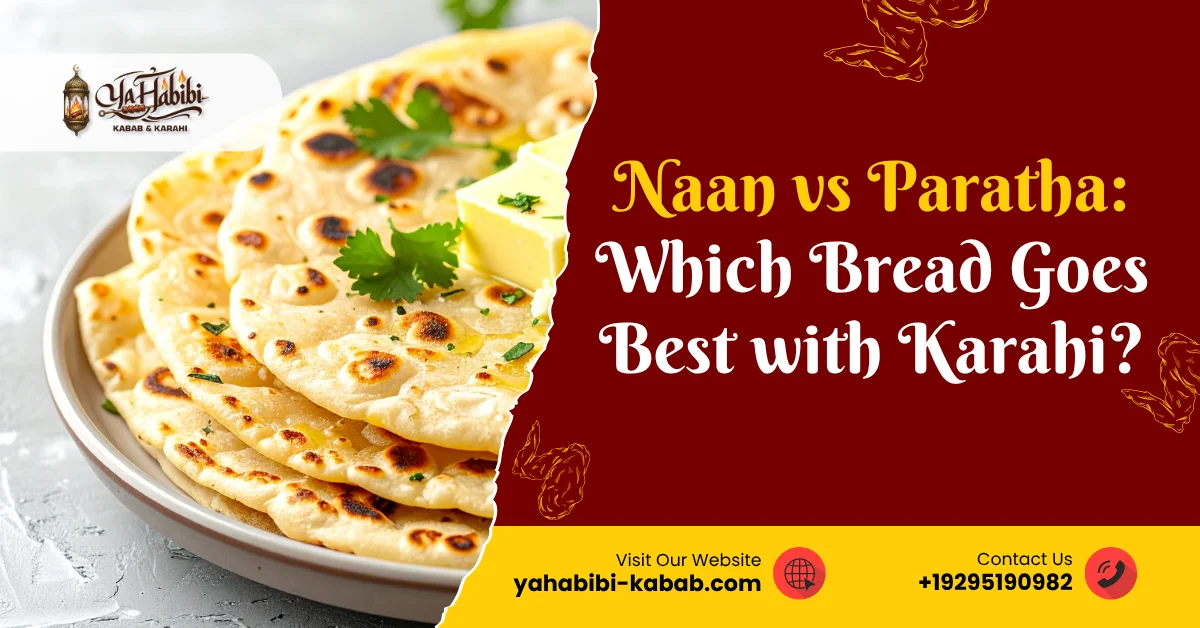
A hot karahi arrives at the table still sizzling, with tender meat, tomatoes, ginger, chilies, and aromatic spices filling the air. Before taking the first bite, there is one important choice to make: should you order naan or paratha with it?
The bread you choose can change the entire meal. A soft bread can soak up the karahi gravy and let the spices stand out, while a flaky, richer bread can add crispness and make each bite more filling. Both naan and paratha are popular choices, but they offer different textures, flavors, and levels of richness.
Naan is usually soft, chewy, and ideal for scooping up sauce. Paratha is crisp, layered, and often cooked with oil or ghee for a deeper flavor. The better pairing depends on the type of karahi you order and whether you prefer a balanced meal or a more indulgent one.
Quick Overview Table: Naan vs Paratha with Karahi
| Feature | Naan | Paratha |
|---|---|---|
| Texture | Soft and chewy | Crisp and flaky |
| Richness | Lighter, especially when served plain | Richer due to oil or ghee |
| Sauce absorption | Best for soaking up gravy and meat juices | Best with thicker sauces |
| Flavor | Mild and lets the karahi stand out | Buttery with a stronger flavor |
| Best choice for | A balanced, sauce-focused meal | A hearty, filling meal |
| Pairs well with | Spicy or gravy-rich karahi | Thick chicken, lamb, or goat karahi |
What Is Naan?
Naan is a soft, leavened flatbread commonly served with grilled meats, curries, and karahi. Unlike thinner flatbreads, naan dough is allowed to rise, which gives the bread its soft center and slightly chewy texture.
Traditional naan is cooked at high heat inside a tandoor, a clay oven designed to produce intense heat. The dough is placed against the hot inner wall, where it cooks quickly and develops light brown blisters and crisp spots on the surface.
Common naan ingredients include flour, water, salt, and yeast or another leavening agent. Some recipes also use yogurt to create a softer texture and a mild tang. Depending on the preparation, naan may be served plain or finished with butter, garlic, herbs, or sesame seeds.
Its mild flavor is one of its main strengths. Naan absorbs sauces and cooking juices without competing with the tomatoes, chilies, ginger, and spices in the karahi. The outside may be lightly crisp, but the center remains soft enough to fold, tear, and scoop.
Why Naan Works Well with Karahi
Naan is easy to tear into small pieces, making it practical for picking up meat and vegetables directly from the karahi. Its soft surface absorbs tomato-based gravy, meat juices, and spiced oil, so little flavor is left behind on the plate.
It also provides balance when the karahi is strongly seasoned. Plain naan has a gentle taste that allows the meat and spices to remain the focus. With a spicy chicken, goat, or lamb karahi, its soft and chewy texture can make each bite feel more balanced.
What Is Paratha?
Paratha is an unleavened flatbread known for its flaky layers and crisp surface. It is usually prepared with flour, water, and salt, without the yeast commonly used in naan dough.
During preparation, the dough is rolled, folded, and layered with oil or ghee. These folds separate as the bread cooks, creating a tender interior with thin, flaky layers. Paratha is generally cooked on a flat griddle rather than inside a tandoor.
The use of oil or ghee gives paratha a richer flavor than plain naan. Its outside becomes golden and crisp, while the center remains soft enough to tear and use for scooping. This combination makes it especially appealing to diners who enjoy texture in every bite.
Because paratha is denser and richer, it can turn karahi into a more filling meal. Its buttery flavor pairs well with bold seasonings, tender meat, and thick sauces.
Why Paratha Works Well with Karahi
Paratha adds crispness and richness to the soft meat and gravy in karahi. The contrast between flaky bread, tender chicken or lamb, and spiced tomato sauce creates a hearty bite with several textures.
Its layered structure also holds up well with thicker gravy. While naan quickly absorbs sauce and becomes soft, paratha keeps some of its crispness, especially around the edges.
Naan vs Paratha: The Main Differences
Naan and paratha can both be served with karahi, but they create different dining experiences. Naan is softer, lighter, and better at soaking up sauce, while paratha adds crisp layers and more richness. The best choice depends on the karahi, the amount of gravy, and how filling you want the meal to be.
|
Feature |
Naan |
Paratha |
|
Dough |
Usually leavened |
Usually unleavened |
|
Texture |
Soft and chewy |
Flaky and crisp |
|
Cooking method |
Tandoor or high-heat oven |
Griddle or flat pan |
|
Richness |
Generally lighter |
Richer due to oil or ghee |
|
Sauce absorption |
Excellent, especially with thinner gravy |
Good, especially with thick gravy |
|
Best for |
Balanced, sauce-focused meals |
Hearty, filling meals |
Naan works well when you want the karahi sauce, meat, and spices to remain at the center of the meal. Paratha brings more flavor and texture of its own, making it better suited to diners who enjoy a richer combination.
Which Bread Goes Best with Chicken Karahi?
Chicken karahi often has a bright and lively flavor built around tomatoes, ginger, green chilies, garlic, and warm spices. The sauce may be thick enough to coat the chicken while still leaving plenty of seasoned gravy to scoop up with bread.
Naan is often the better match for this style of karahi because its mild flavor does not compete with the tomatoes, ginger, or chilies. Its soft texture picks up the gravy and cooking juices, allowing the seasoning of the chicken to remain the main focus.
Paratha also pairs well with chicken karahi, especially for diners who enjoy a richer and more filling meal. Its crisp layers provide contrast against the tender chicken, while the oil or ghee adds extra depth to each bite.
For most diners, naan is the more balanced choice with chicken karahi. Paratha is a strong alternative when you want added richness, crispness, and a more substantial meal.
Which Bread Goes Best with Lamb or Goat Karahi?
Lamb and goat karahi usually have a deeper, more robust flavor than chicken karahi. The meat releases savory juices as it cooks, while tomatoes, chilies, ginger, herbs, and spices create a rich sauce around it.
Naan absorbs those meat juices and the seasoned gravy without making the meal feel too heavy. This allows the natural flavor of the lamb or goat to stand out while still giving you enough bread to scoop up every part of the dish.
Paratha complements the richness of the meat with buttery layers and a crisp surface. However, because both the bread and the karahi can be rich, the combination may feel heavier, especially when the dish contains a generous amount of oil or thick gravy.
Choose naan when you want a balanced meal that keeps the focus on the meat and spices. Choose paratha when you prefer a more indulgent pairing with extra texture and richness.
Which Bread Is Better with Spicy Karahi?
Spicy karahi can contain fresh chilies, chili flakes, black pepper, ginger, and other bold seasonings. The right bread can either keep those flavors sharp and noticeable or make the heat feel smoother.
Soft, plain naan is a dependable choice because it absorbs the spicy gravy and helps spread the seasoning across each bite. Its mild taste allows the chilies, herbs, tomatoes, and spices to remain prominent without adding another strong flavor.
Paratha may make the heat feel less intense because the oil or ghee adds richness. Its flaky layers create a heavier bite that can soften the sharpness of chilies, although the meal may feel more substantial overall.
Choose naan for a lighter pairing that keeps the karahi’s spices at the center. Choose paratha when you want richer bread that can soften the heat and add crisp texture.
Which Option Is Lighter: Naan or Paratha?
Plain naan is generally the less rich option because it is usually baked at high heat and does not rely on layers of oil or ghee. Paratha is commonly folded and cooked with added fat, which gives it a crisp texture and fuller flavor.
That does not mean every naan is lighter than every paratha. Recipes vary, and toppings such as butter, garlic spread, or oil can change the final result. Portion size also matters, especially when the bread is served with a rich karahi or several side dishes.
For diners who want a simpler bread that keeps the focus on the meat, gravy, and spices, plain naan is usually the better choice. Paratha is more suitable when extra richness and a more filling texture are part of the experience you want.
Choose Naan If You Prefer…
Choose naan when you enjoy soft, chewy bread that is easy to tear and dip. Its absorbent texture makes it especially useful for picking up karahi gravy, tomatoes, herbs, and seasoned cooking juices.
Naan may be the right choice if you prefer:
- A soft and slightly chewy texture
- A less rich accompaniment
- Bread that absorbs plenty of sauce
- A pairing that keeps the meat and spices at the center
- A balanced option for chicken, lamb, or goat karahi
Plain naan works particularly well for diners who want to taste the full spice profile of the dish without adding too much richness.
Choose Paratha If You Prefer…
Choose paratha when you want bread with crisp edges, flaky layers, and a more pronounced flavor. The oil or ghee used during preparation gives it a richer taste and helps create a strong contrast with tender meat and thick gravy.
Paratha may be the right choice if you prefer:
- Crisp edges and layered texture
- A buttery or richer flavor
- A hearty, filling meal
- Bread that holds up well with thick sauce
- A noticeable contrast between crisp bread and tender meat
Paratha is especially appealing when the meal is meant to feel substantial and indulgent.
Try Traditional Karahi and Fresh Bread in Astoria
Astoria is known for its wide range of international restaurants, making it a fitting place to explore traditional karahi and flatbread pairings. Whether you live in the neighborhood or are visiting Steinway Street, ordering karahi with naan or paratha is a practical way to experience how bread, spices, and slow-cooked flavors work together.
Ya Habibi Kabab & Karahi serves freshly prepared karahi, kababs, grilled meats, and other dishes made with aromatic spices. Diners can choose a bread pairing based on whether they prefer something soft and sauce-friendly or crisp and filling.
The restaurant is located at 25-79 Steinway St, Astoria, NY 11103. It is open Sunday through Thursday from 12:00 PM to 2:00 AM and Friday through Saturday from 12:00 PM to 3:00 AM, making it a convenient option for lunch, dinner, or a late-night meal.
Final Verdict: Naan or Paratha with Karahi?
Naan and paratha both pair well with karahi, but each one serves a different purpose. Naan is soft, chewy, and highly effective at soaking up tomato-based gravy, meat juices, and spices. Its mild flavor also helps balance strongly seasoned or spicy karahi.
Paratha offers crisp edges, flaky layers, and added richness from oil or ghee. It is a better fit for diners who want a heavier meal and more texture in each bite.
For most karahi dishes, naan is the best all-around choice because it absorbs sauce well and allows the meat and seasoning to remain the main focus. Paratha is ideal for diners who prefer a crisp, richer, and more filling combination.
There is no wrong choice. The best bread depends on the type of karahi, the thickness of the gravy, and whether you prefer a balanced meal or a more indulgent one.
Frequently Asked Questions
Is Naan or Paratha Better with Karahi?
Naan is usually the better all-around choice because its soft, chewy texture absorbs karahi gravy without adding too much richness. Paratha is crisp, flaky, and more filling due to the oil or ghee used in its preparation. Choose naan for a balanced, sauce-focused meal and paratha for a richer experience with more texture.
What Bread Is Traditionally Served with Karahi?
Naan, roti, and paratha are all commonly served with karahi. The choice often depends on regional customs, the restaurant, and personal preference. Naan is popular for soaking up gravy, roti offers a thinner and simpler option, and paratha adds flaky layers and extra richness.
Is Paratha Heavier Than Naan?
Paratha is generally richer and more filling than plain naan. Its dough is folded into layers and usually cooked with oil or ghee, which creates its crisp surface and buttery flavor. However, the final richness depends on the recipe, portion size, and whether the naan is topped with butter or oil.
Which Bread Absorbs Karahi Gravy Better?
Soft naan is especially effective at absorbing thinner or tomato-based karahi gravy. Its airy, chewy interior holds sauce, seasoned oil, and meat juices well. Paratha can also scoop up gravy, but its layered structure and crisp surface work particularly well with thicker sauces.
Can I Eat Karahi Without Bread?
Yes. Karahi can be eaten with rice or enjoyed alongside accompaniments such as salad, yogurt sauce, or grilled vegetables. However, flatbreads remain a popular pairing because they make it easy to scoop up the meat, tomatoes, spices, and gravy in each bite.
Where Can I Try Karahi with Naan or Paratha in Astoria?
Visit Ya Habibi Kabab & Karahi at 25-79 Steinway St, Astoria, NY 11103 to explore freshly prepared karahi, kababs, grilled dishes, and traditional bread pairings.